


Free-Range vs Intensive Improved Kienyeji Farming in Kenya
Free-Range vs Intensive Improved Kienyeji Farming in Kenya: Which System Is More Profitable? (2026 Guide)
Choosing the right production system is one of the most important decisions every poultry farmer must make. One of the most common questions among new and experienced farmers is “Should I keep improved kienyeji chickens under a free-range or intensive system?” The answer depends on your farming goals, available land, budget, labour, and target market.
Both production systems can be highly profitable when managed correctly. However, each has unique advantages and challenges. Understanding these differences will help you select the system that matches your resources and business objectives.
Improved kienyeji chickens are popular in Kenya because they combine the hardiness of indigenous birds with better growth rates and higher egg production. Their adaptability allows them to perform well under both free-range and intensive systems, making them an excellent investment for commercial and small-scale farmers.
If you are planning to start an improved kienyeji poultry project, begin with healthy, vaccinated birds from our KARI Improved Kienyeji Chickens for Sale in Kenya page. Farmers comparing other dual-purpose breeds can also explore our Kuroiler Chicks for Sale in Kenya, while those interested in faster meat production may consider our Sasso Chicks for Sale in Kenya.
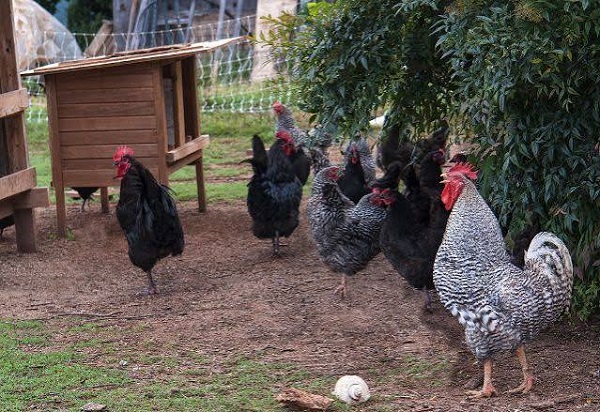
What Is Free-Range Improved Kienyeji Farming?
Free-range farming allows chickens to spend part of the day outdoors where they can forage for grass, insects, seeds, and other natural food sources while still receiving supplementary feed.
This production system closely resembles traditional poultry farming but incorporates improved management practices such as vaccination, balanced feeding, and proper housing.
Under a free-range system, birds are typically housed securely at night and allowed to roam during the day within a fenced or controlled area.
Advantages of Free-Range Improved Kienyeji Farming
Free-range farming remains popular among Kenyan farmers because of several important benefits.
Lower Feed Costs
Since birds obtain part of their nutrition by scavenging, farmers generally spend less on commercial feeds compared to fully intensive systems.
Strong Consumer Preference
Consumers often associate free-range chickens with:
- Better flavour.
- Firmer meat.
- Natural production.
- Healthier products.
This allows farmers to charge premium prices in many local markets.
Better Bird Welfare
Birds have more space to move naturally, reducing stress and encouraging normal behaviour such as scratching and dust bathing.
Lower stress levels often contribute to healthier flocks.
Reduced Housing Costs
Free-range systems generally require less investment in large poultry houses because birds spend much of their time outdoors.
Farmers still need secure shelters for protection during the night and bad weather.
Suitable for Smallholder Farmers
Farmers with available land can start a free-range enterprise using relatively modest infrastructure while gradually expanding their flock.
Disadvantages of Free-Range Farming
Although free-range farming has many advantages, it also presents several challenges.
Predator Attacks
Birds are more exposed to predators such as:
- Dogs.
- Hawks.
- Eagles.
- Mongooses.
- Snakes.
Good fencing and secure night housing help minimise these risks.
Disease Exposure
Free-range birds are more likely to come into contact with:
- Wild birds.
- Rodents.
- Parasites.
- Contaminated environments.
Strong biosecurity and vaccination programmes are essential.
Slower Growth
Because birds spend more energy walking and foraging, they may grow slightly slower than birds raised under intensive systems.
However, many consumers are willing to pay higher prices for free-range birds because of their meat quality.
What Is Intensive Improved Kienyeji Farming?
Intensive farming involves raising birds inside a controlled poultry house where farmers provide all feed, water, and management.
Birds remain within the poultry house or enclosed runs throughout the production cycle.
This system allows farmers to control:
- Feeding.
- Water supply.
- Vaccination.
- Lighting.
- Biosecurity.
- Temperature.
- Disease monitoring.
It is widely used by commercial poultry farmers aiming for maximum productivity.
Advantages of Intensive Farming
Faster Growth
Birds expend less energy moving around and convert feed into body weight more efficiently.
This often results in earlier market readiness.
Better Feed Monitoring
Farmers know exactly how much feed each flock consumes, making it easier to monitor feed conversion and identify management problems.
Easier Disease Control
A controlled environment simplifies:
- Vaccination.
- Cleaning.
- Biosecurity.
- Disease monitoring.
This reduces the risk of disease outbreaks when proper management practices are followed.
Higher Stocking Capacity
Intensive systems allow more birds to be raised within a smaller area, making them suitable for farmers with limited land.
Better Record Keeping
Because management is more controlled, farmers can easily monitor:
- Growth rates.
- Feed consumption.
- Egg production.
- Mortality.
- Vaccination schedules.
Accurate records support better decision-making and improved profitability.
Disadvantages of Intensive Farming
Despite its advantages, intensive farming also requires greater investment.
Challenges include:
- Higher feed costs.
- Increased housing expenses.
- Greater dependence on electricity and equipment.
- More labour for cleaning and management.
- Higher financial losses if disease outbreaks occur.
Good management is essential to maintain profitability under intensive systems.
Which System Is More Profitable?
Profitability depends on several factors rather than the production system alone.
Consider:
- Cost of feed.
- Market prices.
- Land availability.
- Labour costs.
- Housing investment.
- Disease management.
- Customer preferences.
Farmers selling directly to consumers, hotels, and specialty markets often achieve premium prices with free-range birds.
Commercial producers supplying supermarkets or large buyers may benefit from the higher efficiency of intensive systems.
Both systems can generate excellent profits when managed professionally.
Choosing the Right System
Before selecting a production system, ask yourself:
- How much land do I have?
- What is my budget?
- Who is my target market?
- How much labour is available?
- Do I want meat production, egg production, or both?
Your answers will help determine which production system best suits your poultry business.
sssssa
The table below highlights the key differences between the two production systems.
| Factor | Free-Range Farming | Intensive Farming |
|---|---|---|
| Initial Investment | Lower | Higher |
| Feed Costs | Lower (birds forage) | Higher (all feed provided) |
| Housing Requirements | Moderate | High |
| Land Requirement | Large | Small |
| Growth Rate | Moderate | Faster |
| Egg Production | Good | Higher and more consistent |
| Labour Requirement | Moderate | High |
| Disease Risk | Higher exposure to outside diseases | Easier to control with good biosecurity |
| Meat Quality | Premium taste and texture | Excellent but less preferred by some consumers |
| Selling Price | Usually higher | Depends on market demand |
| Suitable For | Small-scale and organic farmers | Commercial poultry businesses |
This comparison shows that neither system is universally better. The most profitable option depends on your goals, available resources, and target customers.
Which System Is Best for Egg Production?
If your main objective is to produce eggs consistently throughout the year, an intensive or semi-intensive system is generally the better option.
The reasons include:
- Better control of nutrition.
- Easier vaccination and health management.
- Reduced energy expenditure by birds.
- Improved lighting control.
- Consistent access to clean water.
- Better record keeping.
Farmers who maintain proper management under intensive systems often achieve more predictable egg production.
To further improve laying performance, follow a balanced feeding programme and maintain a strict vaccination schedule.
Which System Produces Better Meat?
Many Kenyan consumers prefer meat from free-range improved kienyeji chickens because it is often considered:
- More flavourful.
- Firmer in texture.
- Leaner.
- More natural.
Restaurants, hotels, and households are often willing to pay premium prices for well-raised free-range birds.
However, intensive systems produce birds faster, allowing farmers to complete more production cycles each year.
Can Farmers Combine Both Systems?
Yes. Many successful poultry farmers in Kenya use a semi-intensive system, combining the advantages of both methods.
In this approach:
- Birds are housed securely at night.
- They receive balanced commercial feed.
- They are allowed controlled access to outdoor runs during the day.
Benefits include:
- Lower feed costs.
- Better bird welfare.
- Improved meat quality.
- Easier health management.
- Reduced predator risk compared to unrestricted free-range systems.
For many small and medium-sized farms, semi-intensive production offers an excellent balance between productivity and profitability.
Common Mistakes Farmers Make
Regardless of the production system, certain mistakes can reduce profits.
Avoid the following:
Buying Poor-Quality Chicks
Healthy, vaccinated chicks are the foundation of a successful poultry business.
Poor Feeding
Underfeeding or using low-quality feed slows growth and reduces egg production.
Ignoring Biosecurity
Diseases spread quickly when hygiene practices are neglected.
Overcrowding
Too many birds in a small area increase stress, disease transmission, and competition for feed.
Poor Record Keeping
Without records, it is difficult to monitor profitability, feed conversion, or flock performance.
How to Choose the Best Farming System
Consider the following questions before making your decision:
Do You Have Enough Land?
Large farms are well suited to free-range or semi-intensive systems.
Limited space often favours intensive production.
What Is Your Budget?
If you have limited capital, free-range farming generally requires lower initial investment.
Commercial intensive systems require higher spending on housing, equipment, and feed.
Who Is Your Target Customer?
If your market prefers premium indigenous chicken meat, free-range birds may generate higher prices.
If you supply supermarkets, institutions, or processors, intensive production may provide more consistent volumes.
What Is Your Production Goal?
- Meat production.
- Egg production.
- Breeding.
- Mixed enterprise.
Your objectives should guide your management system.
Frequently Asked Questions
Which farming system is more profitable?
Both systems can be profitable. Free-range farming often earns higher prices per bird, while intensive farming usually produces more birds and eggs within a shorter period.
Which system has lower feed costs?
Free-range farming generally reduces feed costs because birds obtain part of their diet through foraging.
Which system is easier for beginners?
Many new farmers start with free-range or semi-intensive systems because they require less investment while allowing practical learning before expanding.
Can improved kienyeji chickens perform well under intensive farming?
Yes. Improved kienyeji chickens adapt well to intensive systems when provided with balanced nutrition, proper housing, clean water, and good disease management.
Is semi-intensive farming a good option?
Yes. Semi-intensive farming combines the advantages of free-range and intensive systems, making it one of the most practical and profitable options for many Kenyan poultry farmers.
Why Buy Improved Kienyeji Chicks from Chickbee Farming?
Success in poultry farming starts with healthy birds. At Chickbee Farming, we supply quality, vaccinated chicks to help farmers establish productive and profitable poultry enterprises.
We provide:
- Healthy KARI Improved Kienyeji chicks.
- High-quality Kuroiler chicks.
- Fast-growing Sasso chicks.
- Poultry equipment and accessories.
- Poultry farm setup guidance.
- Technical support before and after purchase.
- Nationwide delivery across Kenya.
Whether you choose a free-range, semi-intensive, or intensive system, starting with healthy chicks gives your flock the best chance of success.
Ready to Start Your Improved Kienyeji Farm?
Whether you’re planning a backyard poultry project or a large commercial enterprise, Chickbee Farming is here to help you succeed with healthy chicks, expert advice, and dependable customer support.
Final Thoughts
Choosing between free-range and intensive improved kienyeji farming depends on your goals, available land, budget, and target market. Free-range systems often attract premium prices because of consumer preference for naturally raised birds, while intensive systems provide faster growth, more consistent egg production, and higher stocking capacity.
For many Kenyan farmers, a semi-intensive system offers the best balance by combining controlled feeding and health management with outdoor access that supports bird welfare and meat quality.
Whichever system you choose, success starts with healthy chicks, balanced nutrition, proper housing, vaccination, biosecurity, and good record keeping. With the right management practices, improved kienyeji farming can be a sustainable and highly profitable poultry enterprise.