


Poultry Vaccination Schedule in Kenya
🐔 Poultry Vaccination Schedule in Kenya (Complete Guide for Broilers, Layers & Kienyeji Chickens)
🟢 Understanding Poultry Vaccination in Kenya
A poultry farm succeeds or fails long before birds reach market age or peak egg production. One of the most critical factors behind a healthy flock is a proper vaccination plan applied at the right time.
In Kenya, poultry farmers face constant disease pressure due to climate changes, mixed farming systems, live bird markets, and limited biosecurity in some regions. Diseases such as Newcastle, Gumboro, Marek’s, and Fowl Pox can wipe out an entire flock within days if protection is not in place.
Vaccination is not about treating illness—it is about building resistance before infection happens. Once a disease enters a flock, especially viral diseases, treatment is often ineffective or very expensive. This makes prevention the only reliable strategy.
A proper vaccination program works best when combined with:
- Clean poultry housing
- Good feeding practices
- Safe drinking water systems
- Proper hygiene and litter management
👉 If you are setting up your farm, start with proper structure design here:
🧠 Quick Understanding: How Poultry Vaccines Work
Vaccines introduce a weakened or controlled form of a disease organism into the bird’s body. This does not cause illness but trains the immune system to recognize and fight the disease in future exposure.
Once vaccinated:
- The bird develops antibodies
- The immune system becomes “ready”
- Future infections are less severe or completely blocked
However, vaccine effectiveness depends on:
- Correct storage temperature
- Proper timing
- Correct administration method
- Bird health at time of vaccination
A poorly handled vaccine is almost as ineffective as no vaccination at all.
🚨 Why Vaccination Is Critical for Poultry Farmers in Kenya
Kenya’s poultry industry is growing fast, but disease pressure is also increasing. Many farmers expand quickly without strengthening biosecurity systems, which increases outbreak risk.
A structured vaccination schedule helps farmers:
- Reduce sudden flock losses
- Improve growth rate in broilers
- Maintain steady egg production in layers
- Avoid emergency medication costs
- Improve flock uniformity
- Reduce long-term production risks
In commercial poultry farming, consistency is everything. A single disease outbreak can destroy months of investment.
🦠 Major Poultry Diseases in Kenya
Understanding common diseases helps explain why vaccination schedules are structured the way they are.
Newcastle Disease (ND)

This is one of the most destructive poultry diseases in Kenya.
It spreads quickly and affects birds of all ages.
Common signs:
- Sudden deaths
- Twisted necks
- Greenish droppings
- Breathing difficulty
- Drop in egg production
Without vaccination, mortality can be extremely high.
Gumboro Disease (IBD)
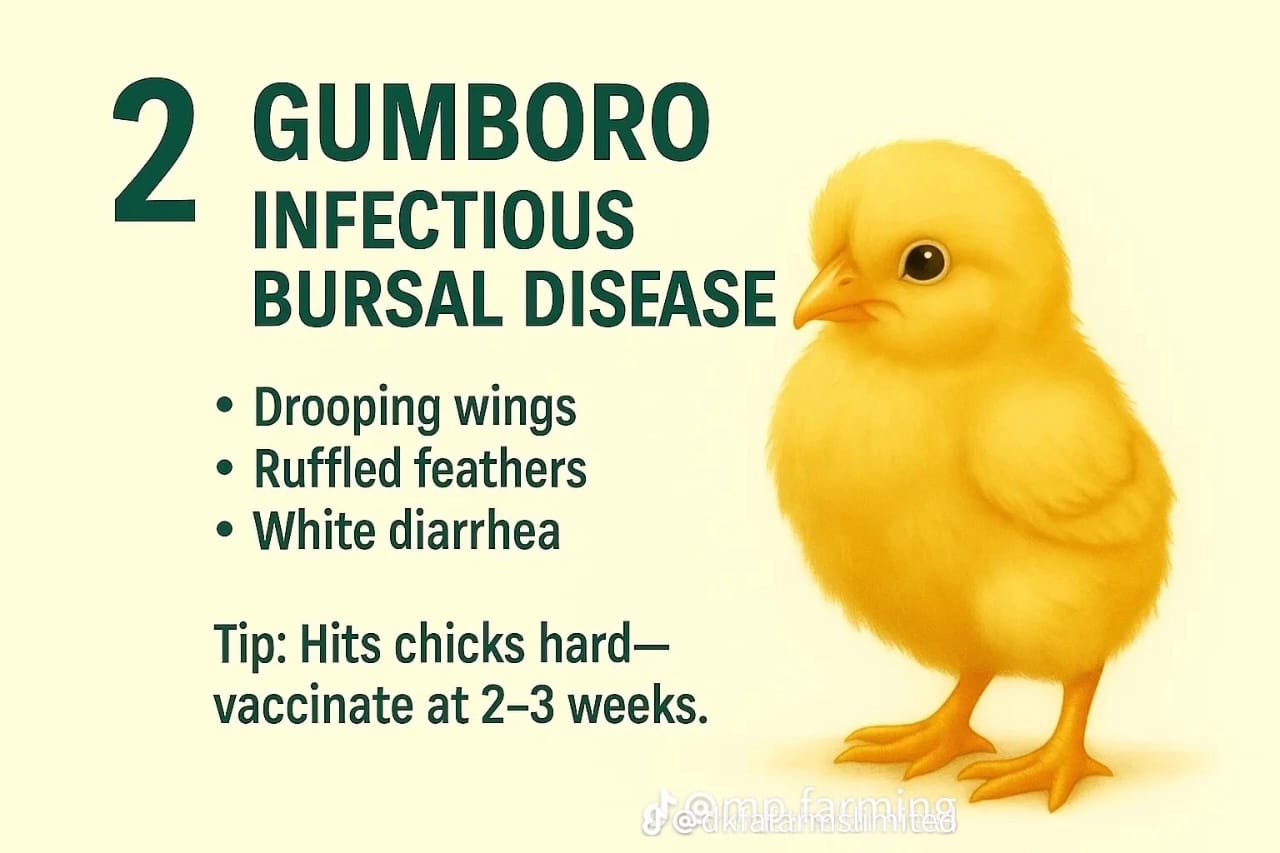
Gumboro mainly affects young chicks and damages the immune system.
Symptoms:
- Weakness and depression
- Watery white droppings
- Loss of appetite
- Increased mortality in chicks
This disease weakens birds permanently if not controlled early.
Marek’s Disease
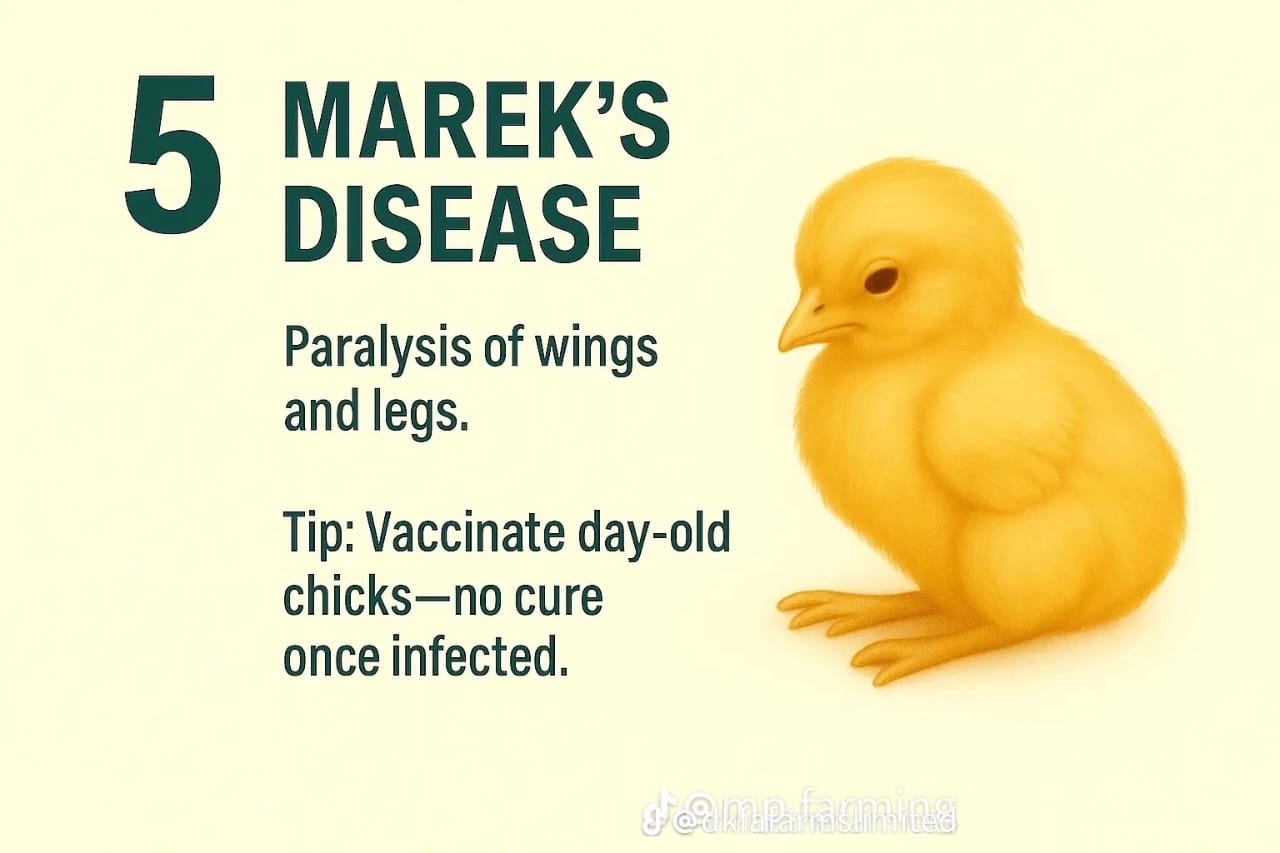
A viral disease affecting nerves and internal organs.
Signs:
- Paralysis of legs or wings
- Weight loss
- Difficulty moving
- Sudden death
Vaccination is usually done immediately after hatching.
Fowl Pox
Common in free-range and kienyeji systems where mosquitoes are present.
Symptoms:
- Wart-like skin lesions
- Reduced feeding
- Slow growth
- Drop in egg production
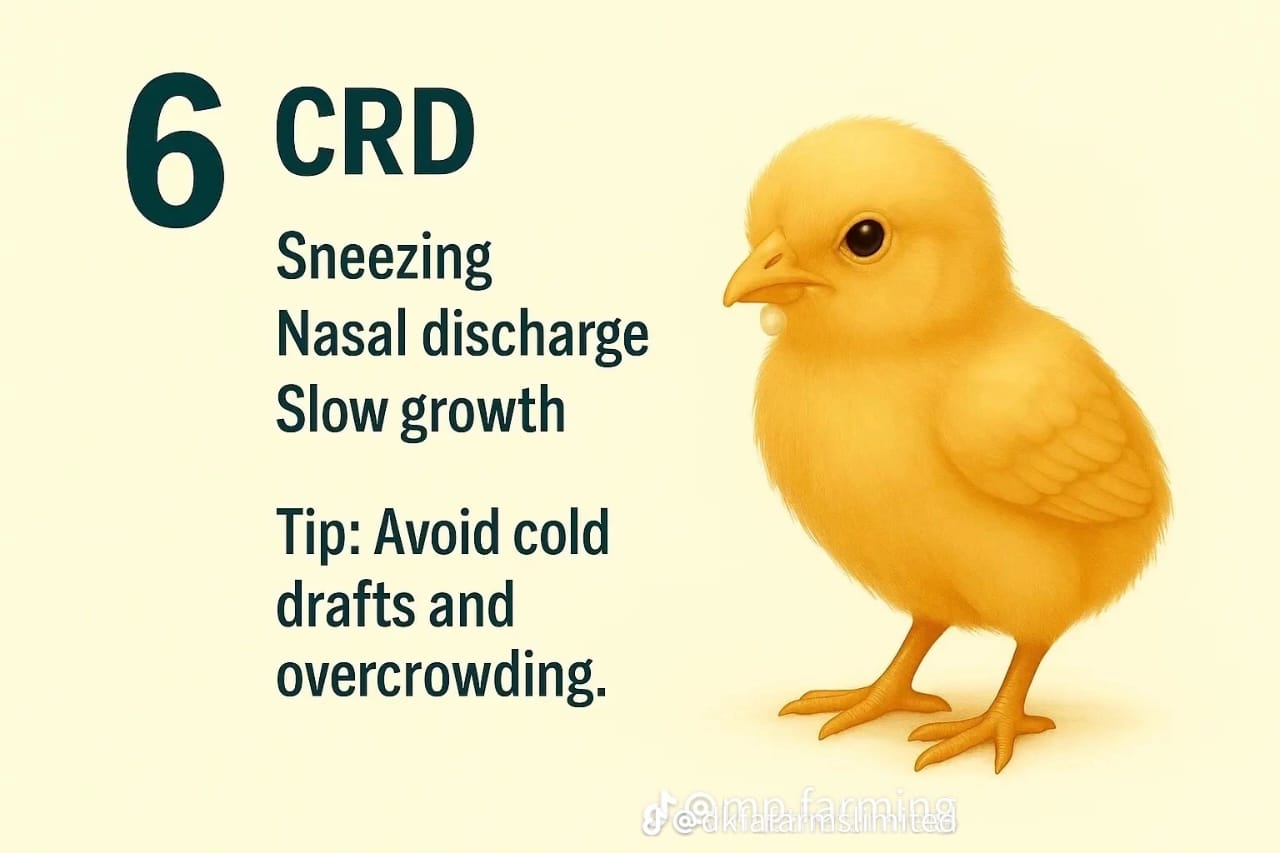
Infectious Bronchitis
Affects respiratory system and egg quality.
Symptoms:
- Sneezing
- Coughing
- Misshaped eggs
- Reduced production
🏡 Why Farm Conditions Affect Vaccine Success
Vaccination alone does not guarantee success. Birds must be raised in supportive conditions.
Poor housing, for example, increases disease pressure. Proper ventilation, spacing, and cleanliness all improve vaccine performance.
👉 Learn proper poultry housing here:
Proffesional cages for broilers,layers,and improved kienyeji, house cages by chiclmasters
Feeding and Immunity Connection
Nutrition plays a major role in immune response. Birds on poor feed will respond weakly to vaccines, reducing protection levels.
Balanced feeding ensures:
- Strong immune development
- Faster recovery from stress
- Better resistance to infection
👉 Feeding guide:
Broiler feeding Guide,chicken food is not about quantity by the Quality of the feed you are feeding your chick,Guide by chickmasters
Equipment Hygiene Matters
Dirty feeding and watering systems can spread disease even in vaccinated flocks.
Using proper equipment reduces contamination and improves health outcomes.
👉 Poultry equipment:
Buy commercal durable feeders and drinkers at chick master poultry Equipment supplies
🔍 Key Insight
Vaccination is not a single activity—it is part of a full system that includes:
- Housing
- Feeding
- Water management
- Hygiene
- Biosecurity
If one system fails, the entire flock becomes vulnerable.