


How to Start a Modern Bee Farm
How to Start a Modern Bee Farm in Kenya
Introduction
Starting a modern bee farm in Kenya is a rewarding and profitable venture. With the growing demand for honey and other bee products, modern beekeeping has become a viable business for both hobbyists and commercial farmers. One of the most important decisions you’ll make is selecting the right hive. Langstroth hives in Kenya are preferred by modern beekeepers for their efficiency, durability, and high honey yields. Unlike traditional or Top Bar hives, Langstroth hives allow easy inspection, modular expansion, and better colony management.
If you’re ready to get started, you can explore our Langstroth hives for sale in Kenya for high-quality hives designed for maximum productivity. For inquiries, call us directly at tel:0117022418.
Step 1: Choosing the Right Location for Your Apiary
The first step in setting up a bee farm is selecting an ideal location:
-
Access to flowering plants: Bees need a steady source of nectar and pollen. Choose a site near fruit trees, wildflowers, or agricultural crops.
-
Water source: Bees require water for cooling hives and feeding larvae. Ensure your farm has access to clean water.
-
Shade and protection: Avoid exposing hives to direct, harsh sunlight. Trees or shade nets work well.
-
Wind protection: Use natural windbreaks or fences to shield hives from strong winds.
-
Accessibility: The site should be easily reachable for inspections, harvesting, and transporting honey.
Proper site selection improves colony health and honey production, which is critical for commercial success.
Step 2: Selecting High-Quality Hives
Investing in premium Langstroth hives in Kenya is essential for modern beekeeping. Langstroth hives offer:
-
Modular design: Add or remove supers as the colony grows.
-
Removable frames: Makes honey harvesting easy without disturbing the bees.
-
Durability: Made from treated pine wood to withstand Kenya’s climate.
-
Ease of inspection: Check brood, honey, and pests efficiently.
You can explore our Langstroth hives for sale in Kenya page for options suitable for beginners and commercial farmers. For direct orders,
Step 3: Acquiring Healthy Bee Colonies
The success of your bee farm depends on strong, disease-free colonies:
-
Purchase package bees or nucs from reputable suppliers.
-
Consider local bee strains that are well adapted to Kenya’s climate and environment.
-
Check for disease-free queens and worker bees to avoid colony collapse.
Healthy bees will maximize honey yield and reduce management issues.
Step 4: Installing Hives Properly
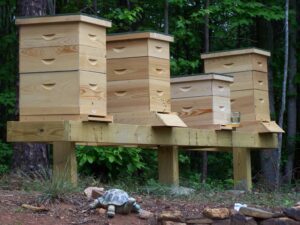
Correct installation ensures colony health and productivity:
-
Place hives on raised platforms or stands to avoid dampness and predators.
-
Orient hive entrances away from prevailing winds.
-
Maintain adequate spacing between hives for easy management and colony expansion.
For more tips on hive setup and equipment, visit our bee equipment suppliers in Kenya page.
Step 5: Hive Management and Monitoring
Efficient management is key to success in modern beekeeping:
-
Inspect weekly: Check brood, honey stores, and signs of disease.
-
Use protective gear and tools: Smokers, gloves, and hive tools simplify inspections.
-
Record-keeping: Maintain a log of hive activity, honey production, and colony health.
-
Pest and disease control: Monitor for Varroa mites, wax moths, and foulbrood.
Beginners can also consult our bee-keeper starter guide for step-by-step instructions.
recheck the importance of hives monitoring, proper management of hive is betterness to a successful farmer
Step 6: Harvesting Honey and Other Products
Harvest honey carefully to ensure colony health:
-
Only take capped honey to prevent colony stress.
-
Leave enough stores for the bees, especially before the rainy or dry seasons.
-
Extract honey using hygienic methods to maintain quality.
Other bee products, such as beeswax, propolis, and royal jelly, can also generate additional income.
Step 7: Seasonal Management Tips for Kenya
Beekeeping in Kenya requires awareness of seasonal changes:
-
Dry season: Ensure bees have enough water and food.
-
Rainy season: Protect hives from excess moisture and monitor for mold.
-
Flowering seasons: Plan honey harvesting during peak nectar flow.
Proper seasonal management increases honey yield and colony survival rates.
Step 8: Scaling Up Your Bee Farm
Once your initial hives are productive:
-
Add more Langstroth hives to expand your farm.
-
Consider selling honey locally or to commercial distributors.
-
Invest in more equipment and protective gear as your apiary grows.
For high-quality hives suitable for scaling, see our Langstroth hives for sale in Kenya page or call <a 0119076723
Conclusion
Starting a modern bee farm in Kenya is straightforward with the right planning, quality Langstroth hives, and consistent management. By choosing the right location, acquiring healthy bees, and following proper hive management practices, you can maximize honey production and profitability.
For high-quality Langstroth hives, equipment, and expert guidance, visit our Langstroth hives for sale in Kenya page or call us at 0117022418
📞 Contact Us
🐝 Chickmaster Bee Farming Kenya
📍 Location: Ngong Town, Kenya
📞 Phone: 0119076723
📧 Email: info@chickbeefarming.co.ke
🌐 Website: www.chickbeefarming.co.ke